Bowing Across Cultures, Instruments, Notations, and Techniques
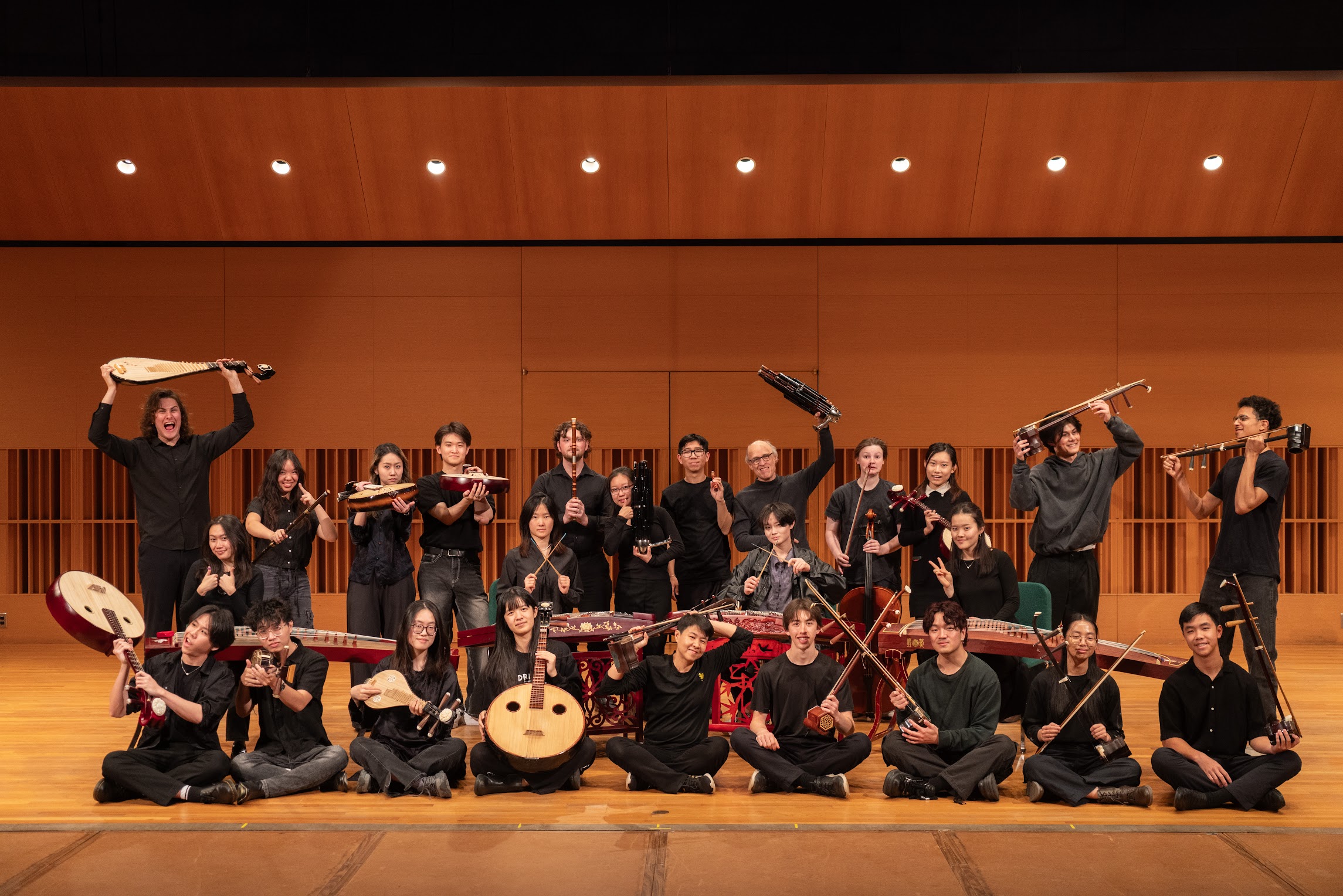
During my first year at Wesleyan University I joined the Chinese Music Ensemble, led by Chia-Yu Joy Lu. I was interested in learning about the music department, and a performance class seemed like a fun way to connect to this community of Wesleyan.
While new to playing in a Chinese music ensemble. This music was part of my childhood.
When I was 11 years old I remember visiting family in San Diego and going to my Po Po’s Chinese opera group. This was my first experience of classical Chinese instruments and music. Playing and hearing traditional
Learning to plat a traditional Chinese instruments has expanded my repertoire as a cellist and piqued my interest in global notations and musical traditions.
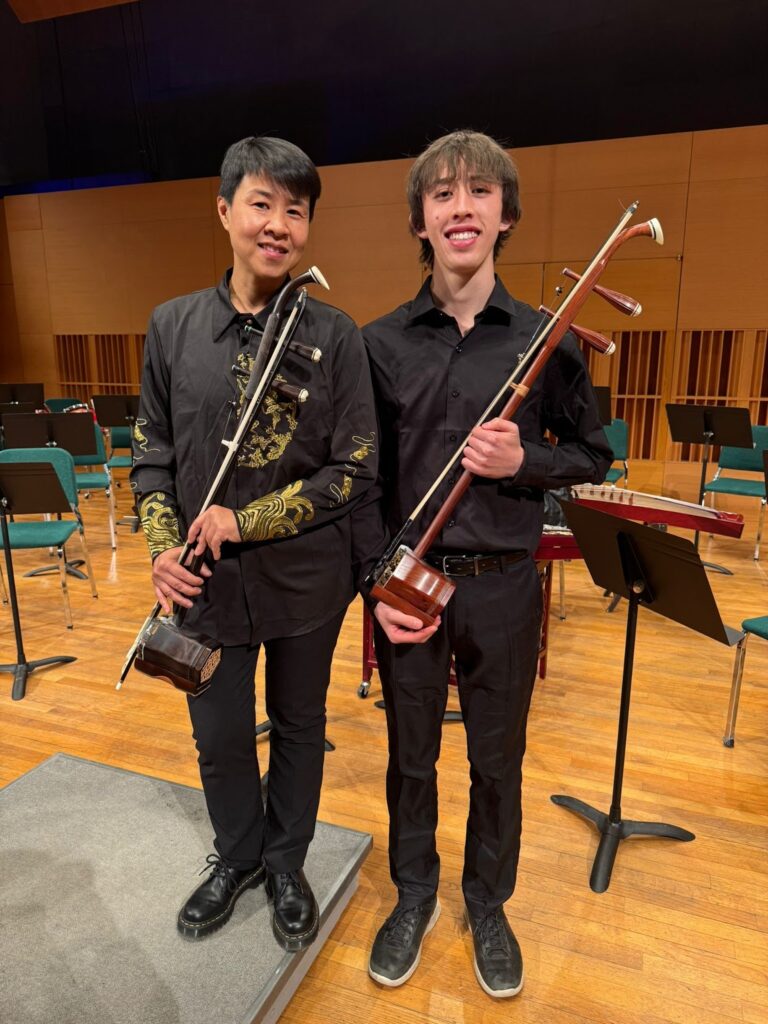
I chose to play the erhu, a two string bow instrument with the hairs of the bow held between the two strings. The class was fantastic, and I learned a great deal from the experience of picking up a new instrument and performing with a group of people I had just met.
The ensemble used cipher notation, a form predominantly used in eastern Asia and based on scale degree/solfege. Learning cipher notation sparked my interest in composing music that includes non-western traditions.
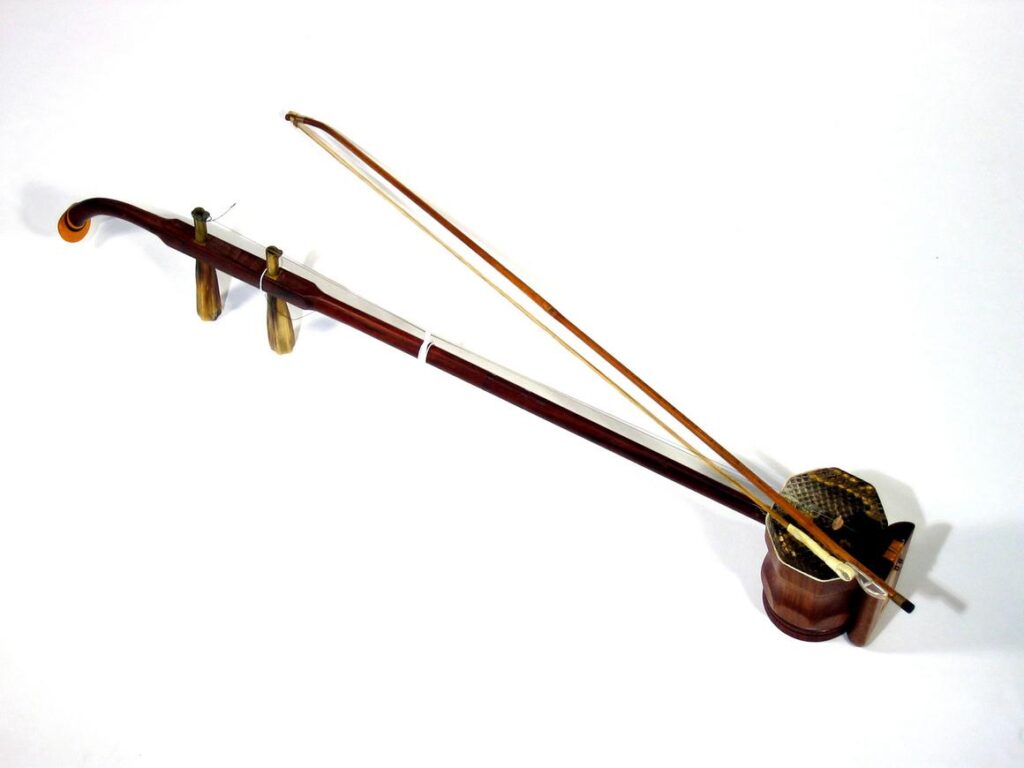
Learning the erhu was fun and challenging. I understood the basics of how to play thanks to my cello training, and time I spent as a kid messing around with an erhu and zhonghu (larger and deeper pitched) I found in my Dad’s garage.
Both the erhu and cello are similar in their structure as bowed instruments, but there are adjustments to arm/instrument/wrist/bow positioning, bow pressure, and finger placement.
Moving between the two instruments is difficult due to these minute distinctions. However, I practiced daily and eventually got the hang of the erhu, and when I got home for winter break I had trouble playing the cello in tune and consistently shifted as I would on the erhu. Luckily my practice makes perfect, and I eventually got back in my cello groove.
My experience in Chinese Music Ensemble has informed my musical interest in exploring a wide range of genres, instruments, and techniques. I learned skills to help translate my current knowledge into other musical spaces and areas of study and performance.
