Bass Basics
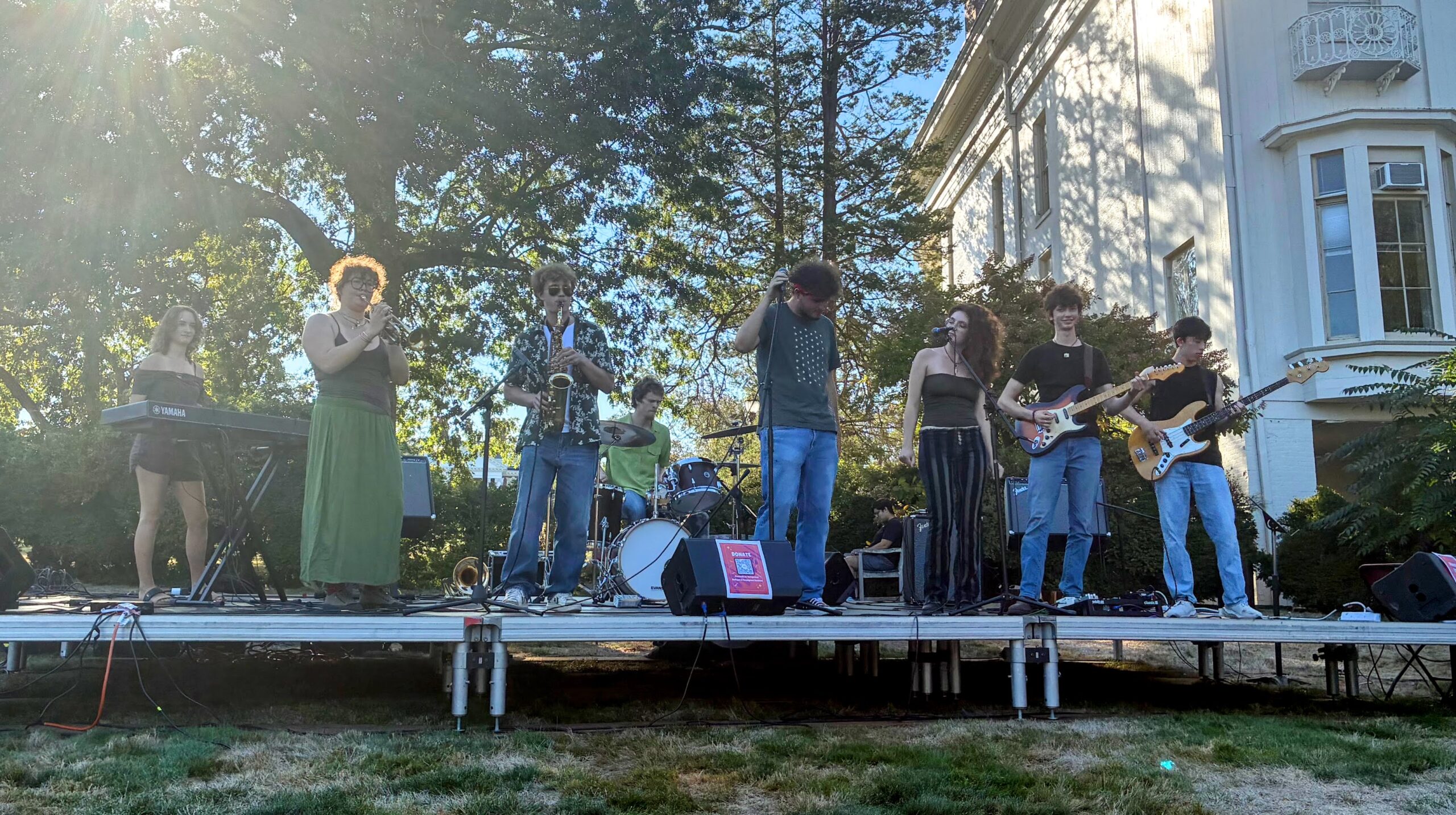
One of my recent musical endeavors has involved picking up the electric bass guitar. This past summer I joined a group of friends at Wesleyan University to form a band. We needed a bass player, and I was hesitant to serve that role, overwhelmed by prospect of learning a new instrument, especially one with frets. I was also quite nervous about playing in the band as I found music performance environments intimidating. Nevertheless, I said yes to becoming a bass player.
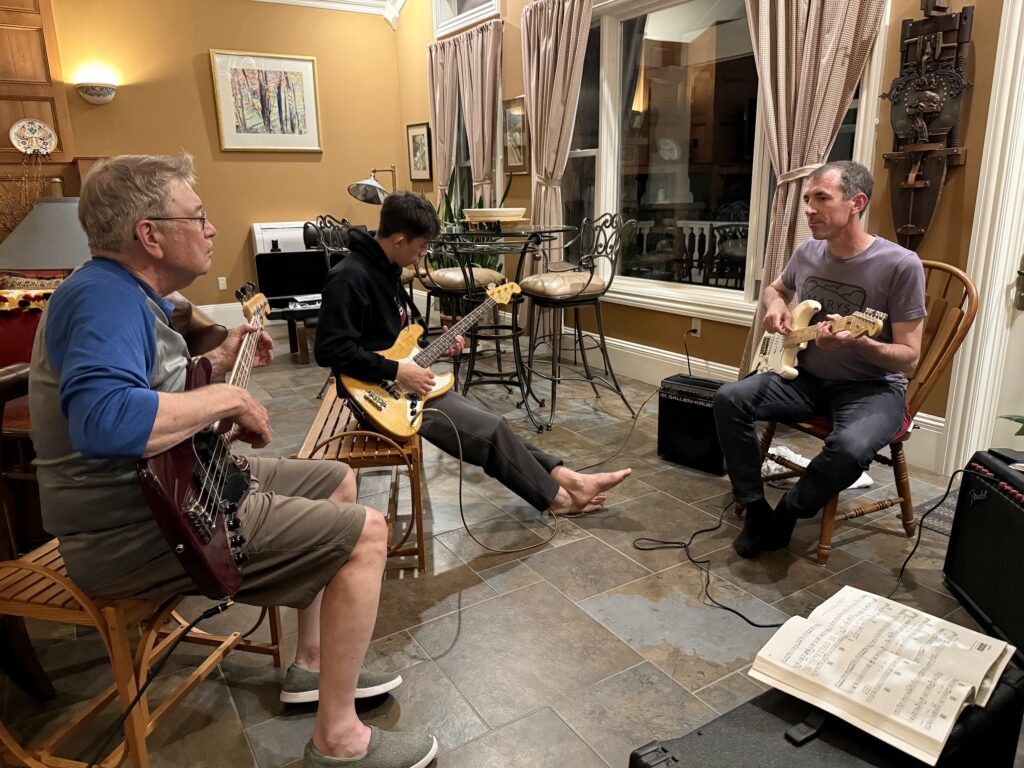
I spent a week in Pennsylvania before the start of the 2025 fall semester playing a borrowed bass. In Pennsylvania I took my first informal bass lessons and jammed with my family. This time got me excited about playing in the band.
Back at Wesleyan the band started off as a rocky, stressful, time-consuming commitment. I was not anticipating how much work and logistical organization a band requires. However, it has been a blast to be part of the student band community and a good way to return to live performance.
I’ve also learned more about my own musical interests. I want to write music and develop my skills with a wide array of instruments. Along with the band I started bass lessons with Roy Wiseman at Wesleyan University to develop a stronger foundation with the instrument. Lessons have taught me the importance of scale structure and the flexibility of scales for creating bass lines.
As a musician I am substantially dependent on my ear, which is a useful skill; however, with the bass, I am becoming more adept with music theory. I have already gotten more proficient in identifying the key(s) of a song and putting together a bass line to accompany it on the spot. This skill has strengthened my role within the band. I find music theory to be challenging and confusing, but learning the bass has given me a good opportunity to take on this challenge, and playing with the band has provided me with a novel creative and social outlet that has proven very satisfying.
