Launched into Sound: Software, Technology, and Composition
During the spring semester of 2025 I took my first music theory class at Wesleyan University. In MUSC 103: Materials and Design, taught by professor Paula Matthusen, I developed my skills in Ableton LIVE, a digital audio workstation (DAW) for music composition. Before coming to Wesleyan, my only experience with any kind of music computer software was with Garage Band. While MUSC 103 was a music theory class, it went much further and taught me how to compose a piece of music, specifically using technology and software.
Throughout the semester I built my knowledge of the structure of music (theory) and applied it to my growing expertise in Ableton LIVE. I shared my learning and experiences through various compositional projects. Since then I have explored Ableton even further.
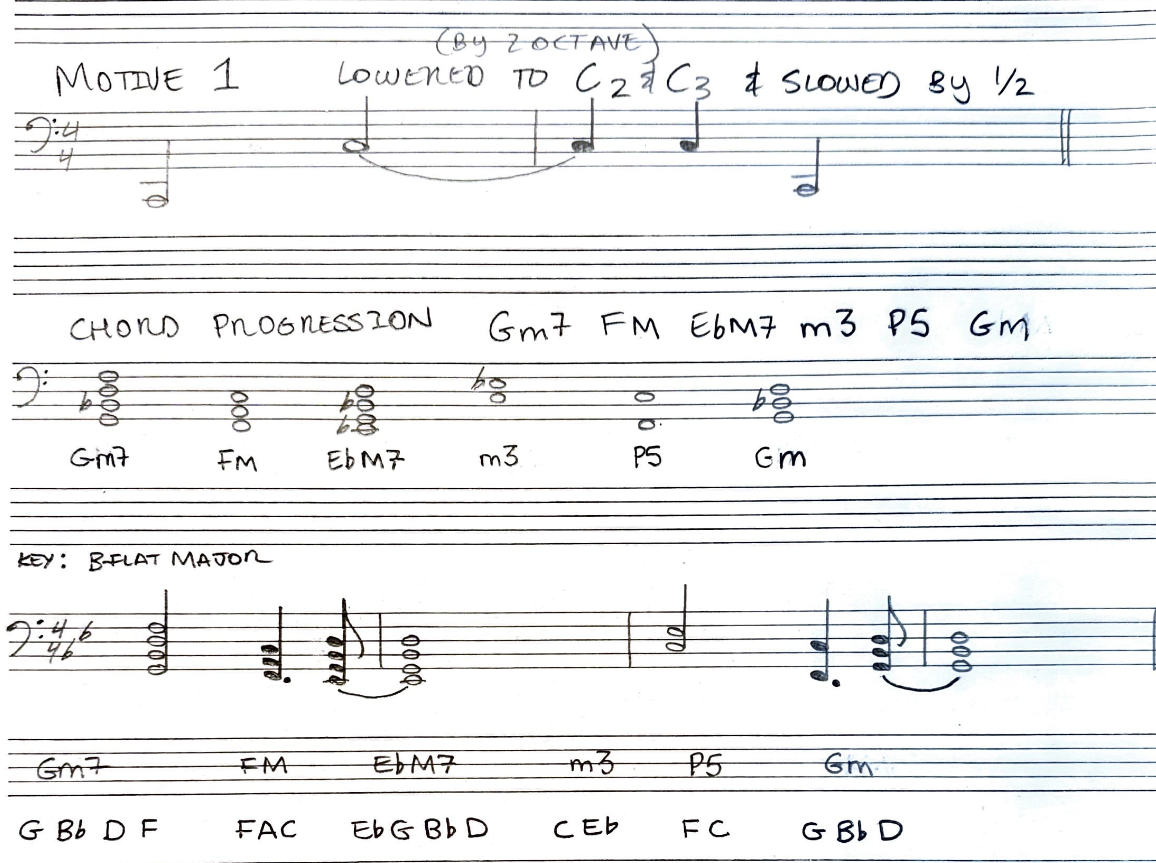
Final Composition
The more I composed and explored, I felt limited by the presets in Ableton (the basic instruments loaded into the software when you first download it). I wanted to feel like I was really making what everyone was hearing, and this interest led me to MIDI instruments. MIDI or Musical Instrument Digital Interfaces are instruments that connect to a computer and various musical software to make noise. This allows for really interesting sounds to be produced as you are not delineated by the sound of for example, a cello or piano.
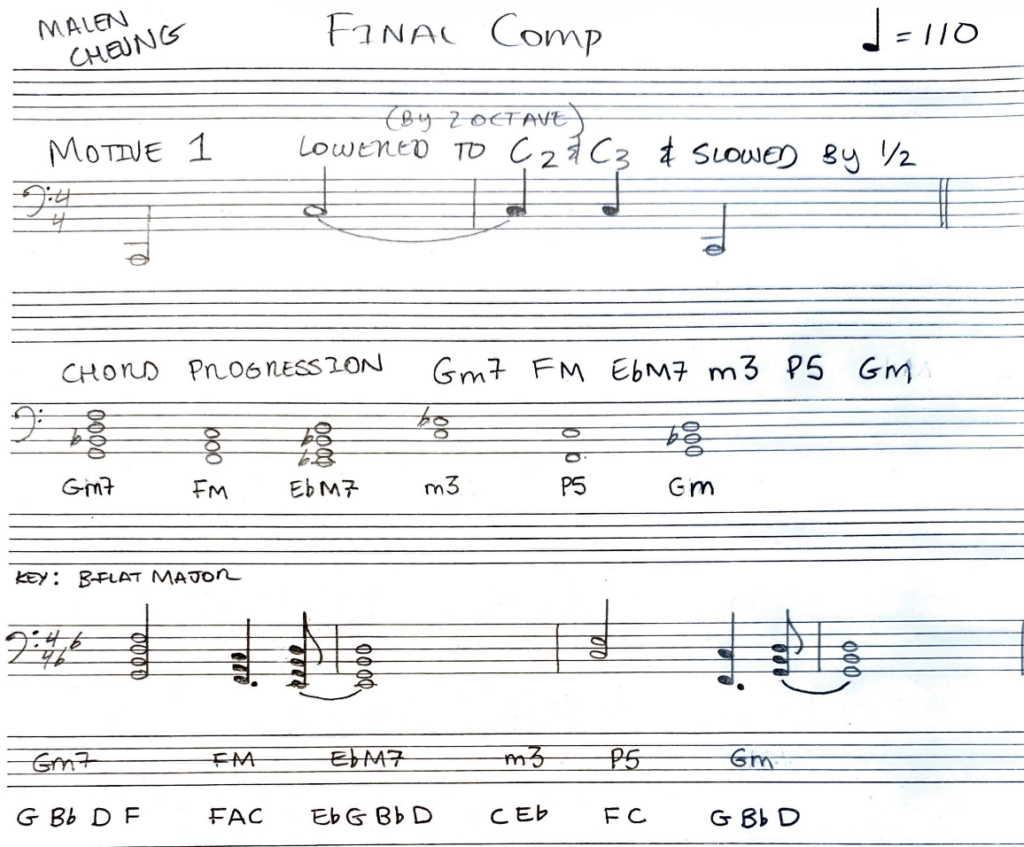
My exploration of MIDI controllers led me to combine—on Ableton—my small Roland synthesizer and a MIDI keyboard gifted to me over spring break. As I grew more comfortable with the software, I was able to further explore the possibilities of the technology and more accurately reflect my musical imagination, a process that led to my final composition assignment taking shape. MUSC 103 (Materials and Design) not only helped me build the skills to produce and compose a quality composition but it also piqued my interest in music and exploring the various possibilities of music and music technology.
